
Insect Screen Guide
How to Clean and Maintain Insect Screens
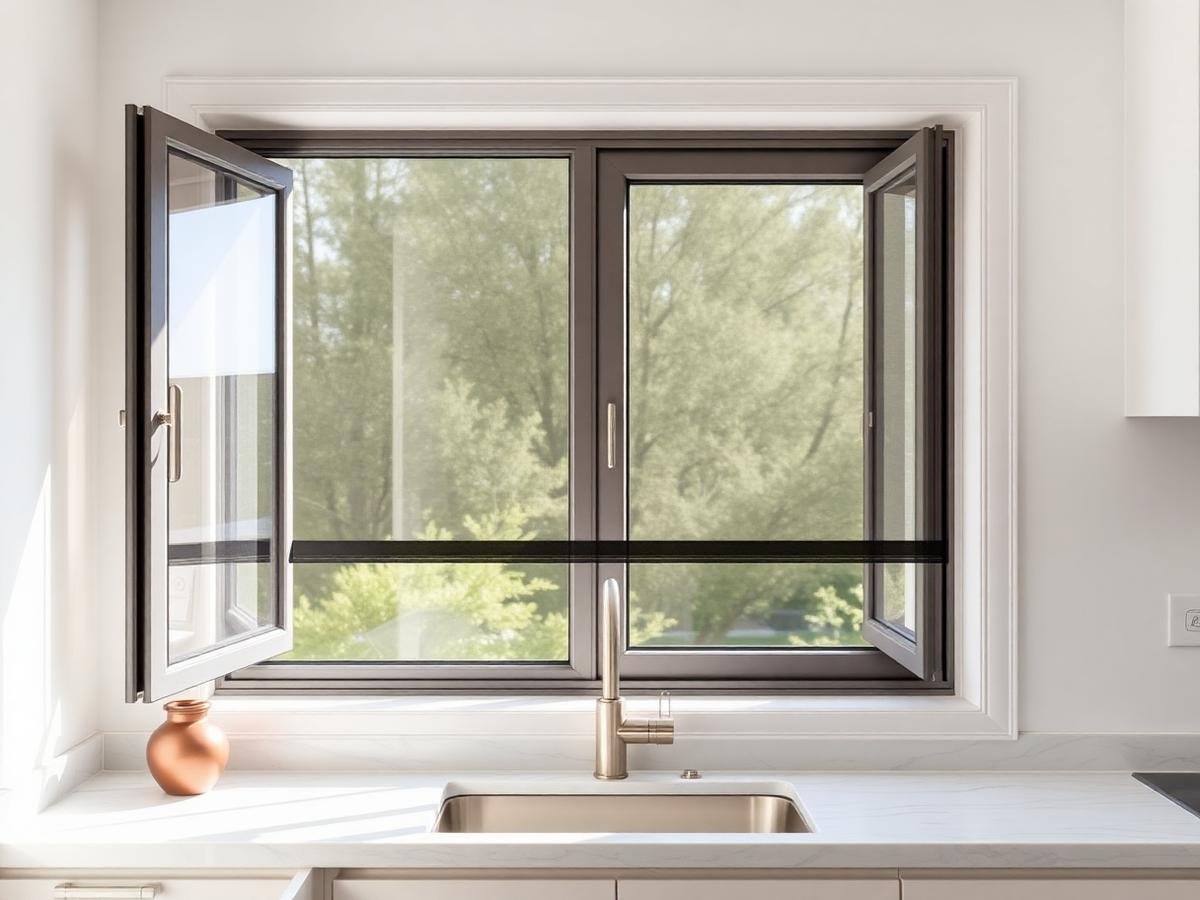
Insect screens rarely wear out. They get neglected, and then they get replaced. Dust binds with monsoon humidity into a film that blocks airflow, grit grinds the rollers, and a small tear that would have taken five minutes to patch becomes a new panel. Twenty minutes, twice a year, prevents nearly all of it.
What you need
- A soft brush or a vacuum with a brush head
- Warm water with a few drops of mild dish soap
- A soft cloth or sponge
- A dry cloth
Nothing else. In particular, no pressure washer, no scouring pad and no solvent. All three will cost you a mesh.
The routine
- Dry first. Brush or vacuum both faces of the mesh to lift loose dust. Wetting dusty mesh turns it to mud and pushes it into the weave.
- Wash gently. Wipe with the soapy water, moving along the weave rather than in circles. On a pleated screen, follow the folds.
- Rinse lightly. A damp cloth is enough. Do not flood the frame, because water sitting in the channel is what corrodes fixings.
- Dry it. Wipe the frame dry and leave the screen open until the mesh is fully dry.
- Clear the track. For sliding systems, run a dry brush through the bottom track and vacuum out the grit.
Never hose a screen down in place. Water driven through the mesh carries dirt into the rollers and leaves it there.
The checks that matter
Tracks and rollers
If a sliding panel has started to scrape, the cause is almost always grit in the track rather than a failed roller. Clear it first. If it still drags, the rollers can usually be adjusted or swapped without touching the panel.
Corners and fixings
Press each corner of the frame. Any movement means a loose corner joint, and a frame that flexes will pull the mesh out of its spline. Tighten it early.
Small tears
A tear under about a centimetre can be patched. Anything larger, or any tear along the edge where the mesh meets the spline, means a re-mesh. Re-meshing an existing frame costs far less than a new unit, so it is worth asking before you replace anything.
When to do it in Salem
Twice a year works well here: once before the monsoon so the mesh is clear going into the wet months, and once after it to remove what the rain drove into the weave. Screens facing a road or open ground collect more and are worth a brush-down in between.
When it is time to replace
Mesh that has gone brittle and cracks when you press it, a frame that no longer sits flush against the opening, or a sliding panel that has worn its track out of shape, are all past repair. If you are at that point, it is worth comparing the current systems rather than replacing like for like, because the frame choices have moved on.