
Insect Screen Guide
Pleated vs Sliding Mosquito Screens: Which One Fits?
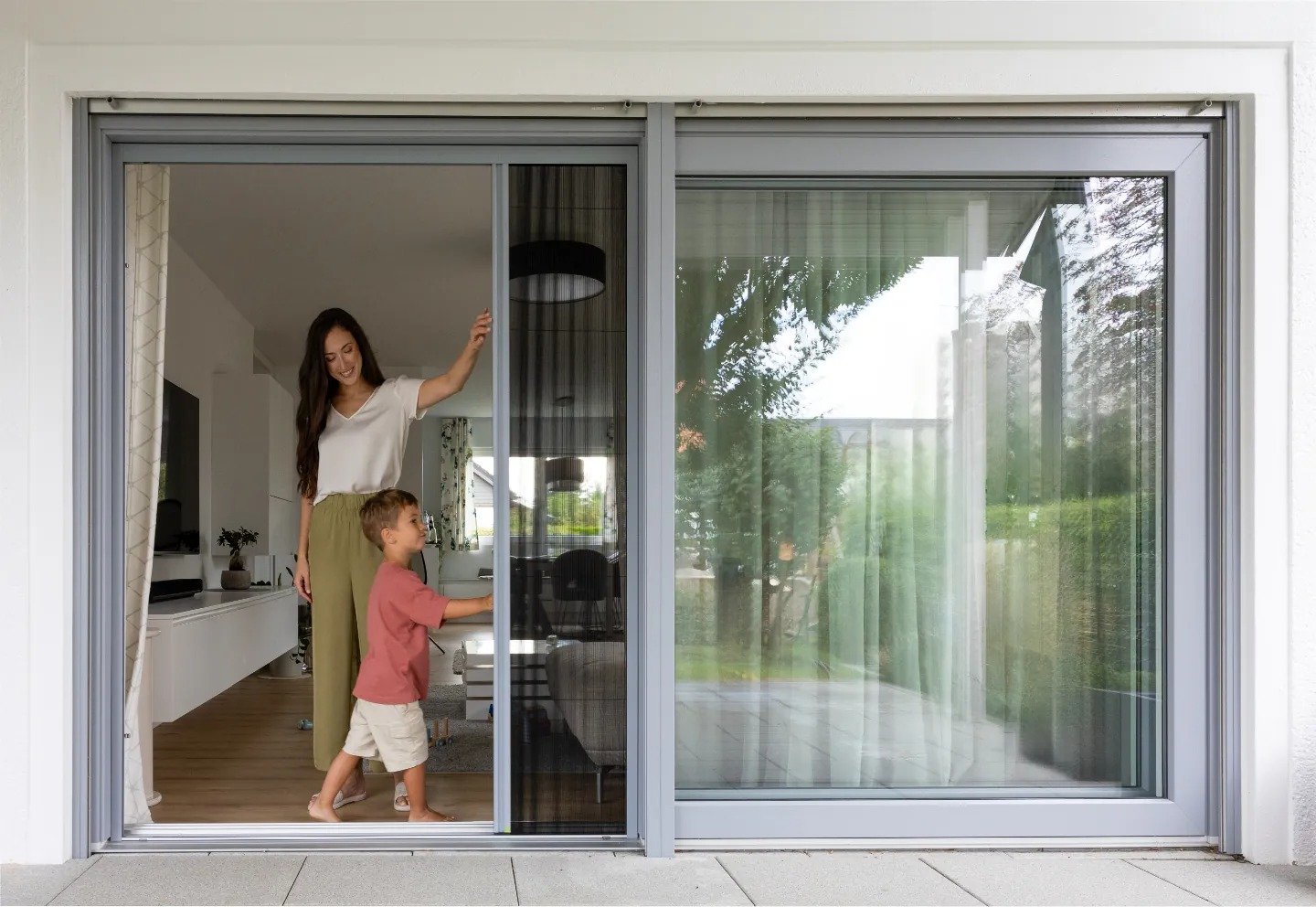
For a balcony or a wide patio door, the choice almost always comes down to two systems: a pleated screen or a sliding one. Both keep insects out. They feel completely different to live with, and that is what should decide it.
The short answer
Choose a sliding screen if the opening is used constantly and you want something you can operate without thinking. Choose a pleated screen if you want the opening to look clear when the screen is not in use.
Side by side
| Pleated | Sliding | |
|---|---|---|
| When open | Folds to a slim stack, almost invisible | Panel parks to one side of the opening |
| Daily use | Needs a steady, even pull | Push and go |
| View | Clearest when stacked away | Mesh covers half the opening at rest |
| Cleaning | Wipe along the pleats | Track needs regular clearing |
| Children and pets | Less forgiving of a shove | Handles rough use better |
| Cost | Higher for the same width | More economical on wide spans |
Where pleated screens earn their price
A pleated screen collapses into a stack only a few centimetres deep. On a balcony where the view is the point of the room, that difference is obvious every day. They also suit openings where there is no clear wall to park a sliding panel against.
The trade-off is that pleats reward a gentle, even pull. In a house where a door gets shoved open with an elbow and a bag of shopping, they will show it.
Where sliding screens win
Sliding systems are the workhorse. The panel runs on a track, carries its own weight, and tolerates being opened twenty times a day for years. On spans above roughly eight feet they are also the more economical option.
Their one maintenance habit is the track. Grit collects in it, and a gritty track turns a smooth slide into a scrape. A minute with a dry brush every few weeks prevents it.
If the opening leads to a balcony you sit on, look at pleated first. If it is the route to the garden that everyone uses, fit sliding.
A note on wide openings
Past about ten feet, a single panel of either type starts to feel heavy. We usually split the span into two panels on a multi-track frame, which keeps the movement light and means a damaged section can be replaced on its own.
See both in person
Thirty seconds of operating each one settles this better than any table. Both systems are set up in the showroom, and you can read how we build each of them beforehand.